

“What is a holy person? The one who is aware of others’ suffering.”
-Kabir
Integrated and Multidisciplinary Approach for Client-centric Healing and Care
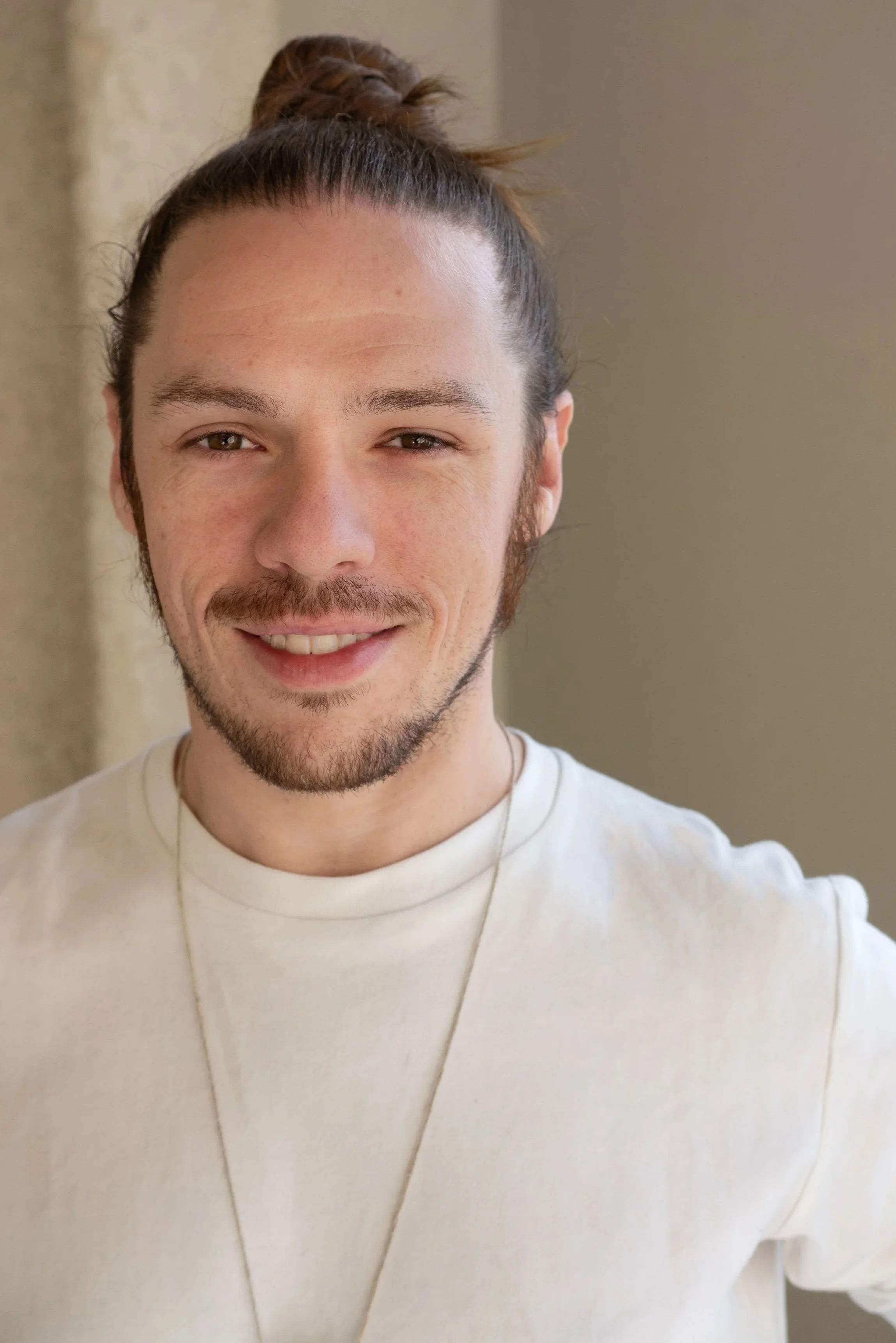
About William
First of all, I am genuinely looking forward to working with you!
I am a BBS Registered Psychological Clinical Counselor and Registered Marriage and Family Counselor, with a Master of Somatic Counseling Psychology from the California Institute of Integral Studies. I have worked in the community since early 2023, just as the world was beginning to emerge from the COVID-19 pandemic.
Before venturing into clinical work, I spent over a decade building facilitation competency in various psychedelic circles, ranging from sacramental and exploratory uses of LSD and DMT, to medicinal and ritual mushroom ceremonies, to cannabis yoga and meditation. After legally registering as a counseling therapist in 2024, I transitioned to San Francisco’s addiction medicine and non-profit recovery sector. Here, I am working directly with individuals in residential recovery treatment, both housed and unhoused, as they heal addiction-related trauma and restore healthy senses of self in order to mindfully navigate their journey to sustainable sobriety and societal reintegration. Now, at the start of 2026, I am excited to be able to continue my own clinical journey by offering Ketamine Assisted Psychotherapy to the general public.
While my longer-term goals include continuing to work with pioneering practitioners to push the legislative needle towards broader adoption of a wider range of psychedelic medicines, to treat all manner of mental health concerns and establishing safe and legal community spaces for psychedelic exploration and healing, for the time being I am limited to working within the confines of current laws and regulations to provide access to the best available psychedelic care.
On a more personal note, in my private life I am a devotional non-dualist as well as a practitioner of Advaita Vedanta. I have backgrounds in Bhakti, Hatha, and Jhana Yoga, Mahayana and Zen Buddhism. I have also explored and practiced Esoteric, Mystic, and Gnostic Christianity, as well as agnostic secular humanism. I am a visionary artist and philosopher, nature lover, horticulturalist, grateful and joyous uncle, and desert temple builder. Above all else, I am an avid student of the sacred and multidimensional nature of the embodied human experience.
About my Practice
-therapy as an art form-
Just as the artist constantly refines their craft through study and practice, each person I work with and the diversity of their experiences adds more facets of experience to the lenses I use and perspectives I may bring into the therapy space.
My integrated and culturally sensitive approach to understanding all human experiences as fundamentally being embodied experiences is foundational in the development of my personal artistic style of therapy - one which focuses on the co-creation of new life conditions through awareness, love, and integration, connecting our individual selves to our greater collective natures.
-
The client is the resident expert on themselves. They are the driver. The therapist is the co-navigator in this approach, following the client’s lead while assisting in navigating obstacles and diversions, overall helping to keep on the track set together to reach the client’s chosen destination.
-
I understand that trauma comes in many shapes, forms, and sizes, and one incident may impact two nervous systems in drastically different ways. With TIC, the goal is to integrate this understanding across all forms of treatment, ensuring the safest container possible for engaging with healing work.
-
We all come from different backgrounds, experiences, and views of the world and its inhabitants. Cultural competency implies that it is the therapist’s job to self-educate about relevant client identities and be in open dialogue with clients around how these identities both show up in and influence the client’s healing journey.
-
The body is never in stasis. We are always in living dynamic intra-connection with ourselves physically, emotionally, mentally, and spiritually. By seeking to integrate this principle into the work, space is created for emergent expressions to be safely experienced and reflected on.
-
Every brain is unique, and some so much so that the way they experience reality is divergent from typical experiences. I have worked clinically not only with individuals with ASD, ADHD, and AuHD, but also in a consultant capacity with other therapists who are looking for clarity and guidance around working with their own Neurodivergent patients, in both types of case creating conditions of treatment better suited to unique neurodiverse nervous system’s needs.
Stylistic Approaches
-
I employ a stylized and artistic approach to integrating multiple modalities and perspective in order to best suit unique client needs and experiences.
-
Using a nonlinear approach to liminal spaces, client and therapist work together to bring complex and sometimes overwhelming psychedelic experiences into contextual connection with everyday life in meaningful and impactful ways.
-
Similar in approach to learning and discovering physical anatomy, Emotional Anatomy seeks to unpack and expand on individual emotional state experiences, helping to bring greater clarity and awareness to the complexities of our multifaceted emotional beings.
-
The push, pull, attraction, aversion and overall patterns of how people are in relation with each other. The goal is healthier, more connected relationships which have greater mutual understanding, reciprocity, and depth.
-
It all starts in the body. By understanding and grasping some important concepts about how the body balances itself in relation to emotional states, one is better position to create successful interventions during periods of emotional dysregulation and stress.
-
Practicing and building awareness of internal states experiences gradually grows both capacity in confidence in successfully managing emotional experiences, even extremely challenging ones.
-
A common relational modality that looks at the dynamics of the family system and the various roles members take within these dynamics.
-
A common therapeutic approach that focuses on gradually changing how we think about ourselves and the world, challenging limiting and harmful narratives and seeking to grow healthy and adaptive ones in their place.
-
A type of therapy that seeks to find solutions to problems, sometimes by asking questions about desired outcomes to creatively think about and discover pathways to them.
-
By practicing radical acceptance of one’s experiences as they are, gradually one learns adaptive pathways out of habitual and reactionary behaviors and ways of thinking, developing in their place a capacity to genuinely and authentically respond to situations, and the world around oneself with grace, clarity, and poise.
Applied Modalities

Contact me
Not quite ready to schedule a consultation but still would like to get in contact? Please fill out the form and I will reach out within 5 business days.